Biological toxins, produced by animals, plants, and bacteria, represent a central biological threat, particularly protein toxins. Once being produced and released, some toxins work directly on their extracellular targets or cell membrane. More dangerous ones, however, target the host cells via recognizing specific cellular receptors, cross the membrane through multiple routes, and act on their intracellular substrates. The multi-step of mechanism of actions of these nanomachines are efficiently executed by multi-domain proteins that have been shaped by evolution. We can either engineer toxins or toxin domains for specific applications, or develop novel toxin-targeting therapeutics.
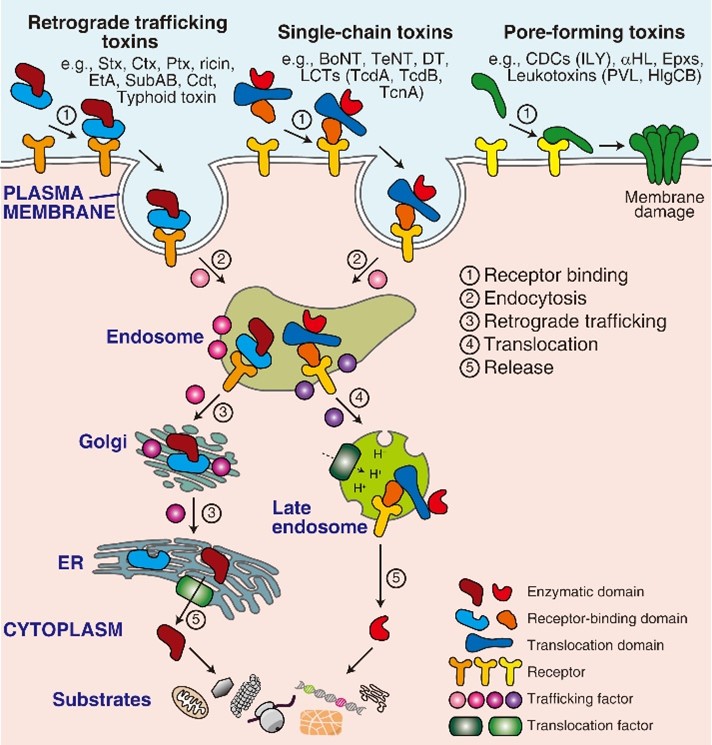
(The mechanism of action of
representative toxins)
Our long-term, question-driven
research aims are to gain better understanding on toxin biology and toxin
bioengineering, which include:
(1) Identifying receptors and/or host factors
for toxins and/or effectors;
(2) Investigating the mechanism of toxin
trafficking and translocation;
(3) Studying the toxin pathology in vivo;
(4) Characterizing the newly identified toxins and toxin-like proteins;
(5) Developing toxin-based tools and/or therapeutics;
(6) Developing small
molecule drugs targeting toxins.
Welcome to TianLab! Last updated on July 5, 2026.
